Podium Appointment Booking
Turning customer interest into a connected booking journey
Med spa customers needed to book follow-up visits with eligible providers they trusted without losing context. I led product definition, customer research, requirements, experience design, and the working prototype for a journey connected to Podium’s CRM.
- Role and collaboration
- I led product definition, customer research, requirements, experience design, and development of the working prototype, using input from Customer Success and beta customers before Engineering handoff.
- Status
- Approved and handed to Engineering for implementation
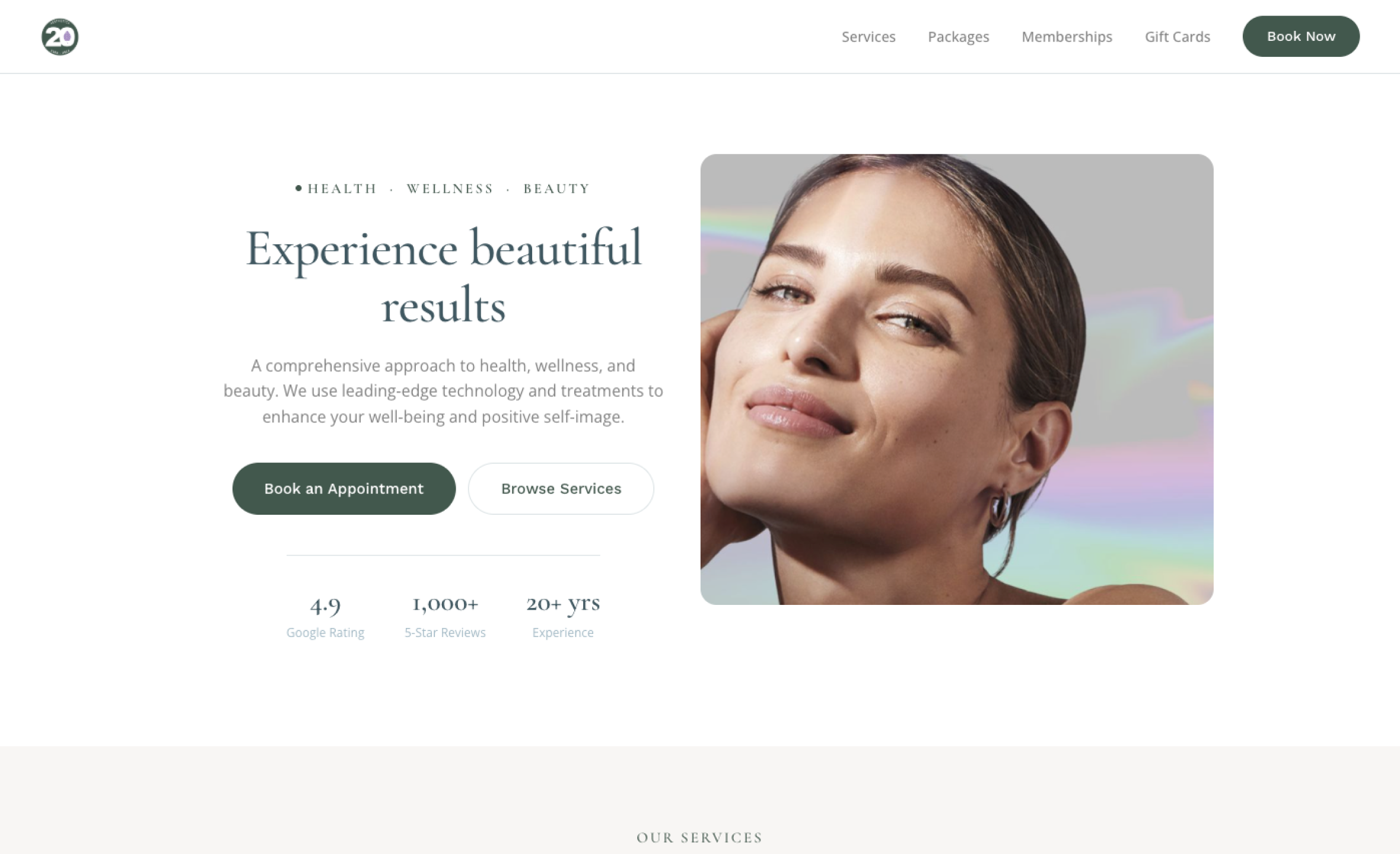
Overview
Extending the CRM into a more useful booking journey
Recurring feedback from med spa clients, shared through Customer Success Managers, suggested that the existing online booking experience needed more investigation. I then spoke directly with a small group of beta customers to understand their workflows.
The existing flow did not clearly preserve booking context or help returning customers find providers they already knew. Businesses also needed confirmed appointments to become part of the customer record rather than live in a disconnected tool.
If we surfaced eligible provider availability and kept appointment details visible throughout the journey, customers could book with greater confidence while businesses gained a connected CRM record.
Connected system
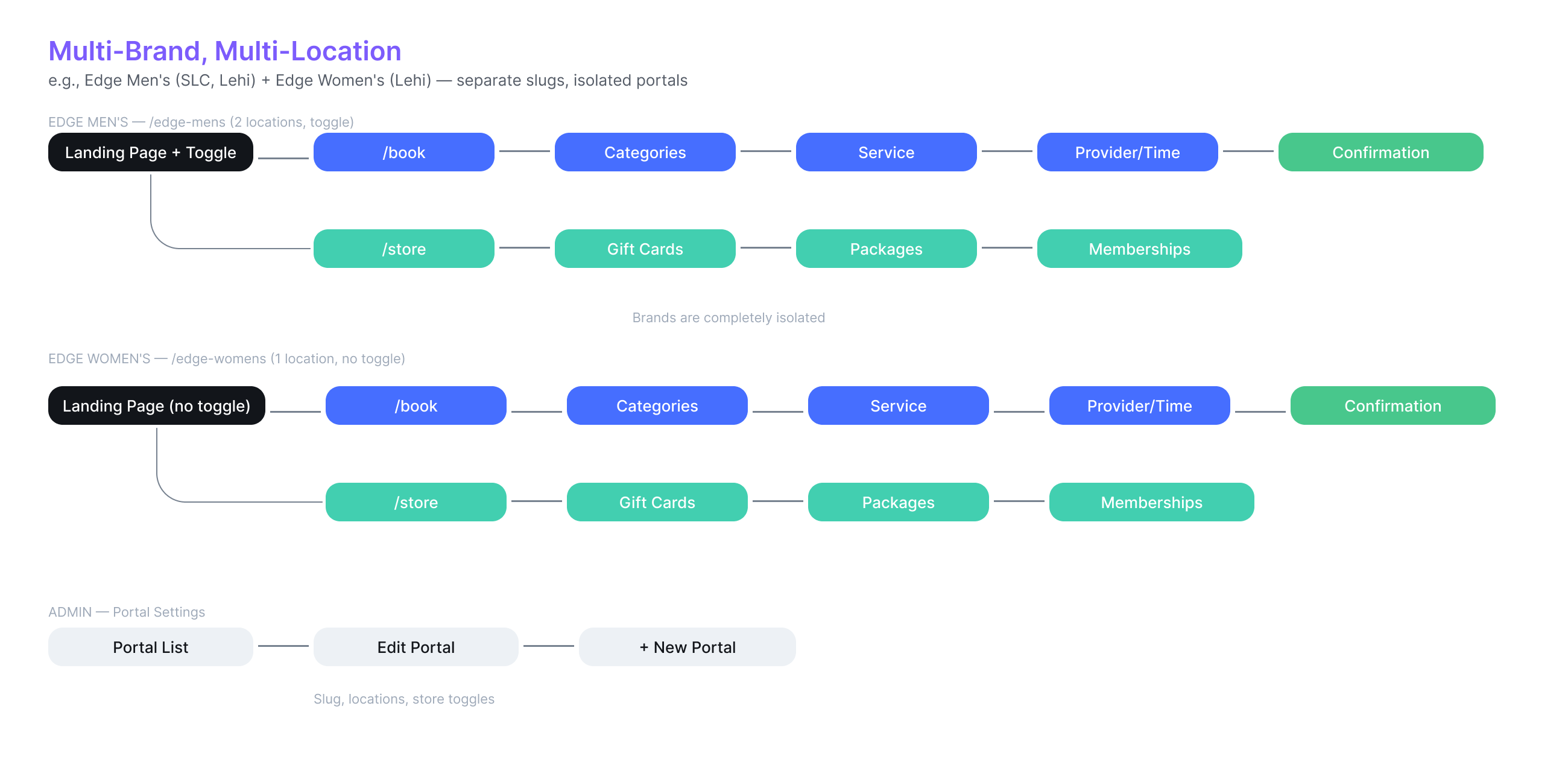
One customer journey depended on services, schedules, locations, and the CRM
Provider availability depended on the appointment type. When a customer selected a service such as Botox, the system needed to show only providers configured to perform it, then account for their schedules and locations.
After confirmation, the appointment needed to be saved into the business’s Podium CRM. The customer saw a guided flow while eligibility, provider availability, location, and appointment records stayed connected behind the scenes.
Provider choice
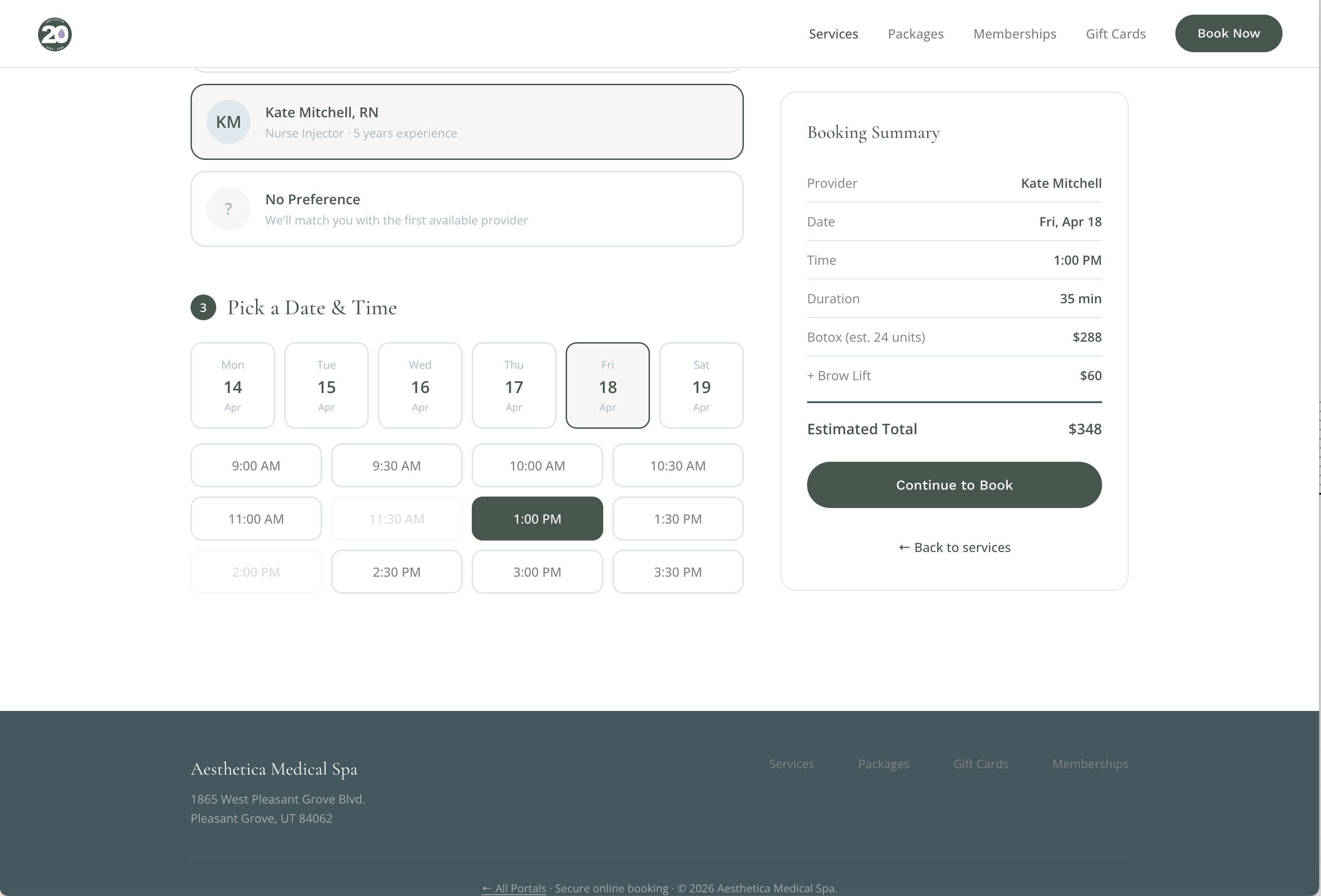
Helping returning customers find the right provider
The earlier flow supported appointment type, date, and time, but did not clearly help customers book with someone they already knew. Beta customers explained that continuity mattered for follow-up appointments, where an existing relationship and treatment context were important.
I made provider selection part of the journey and used the appointment type to filter the available choices. Customers gained a meaningful choice without seeing unavailable or ineligible combinations.
Booking context
Keeping earlier decisions visible through a multi-step flow
In the initial experience, customers selected an appointment type and moved forward, but the information they had already chosen disappeared. Beta customers reported losing context about the appointment they were trying to book.
I revised the design to keep a persistent appointment summary visible while customers selected a service, provider, date, and time. They could confirm earlier choices, catch mistakes, and continue without unnecessary backtracking.
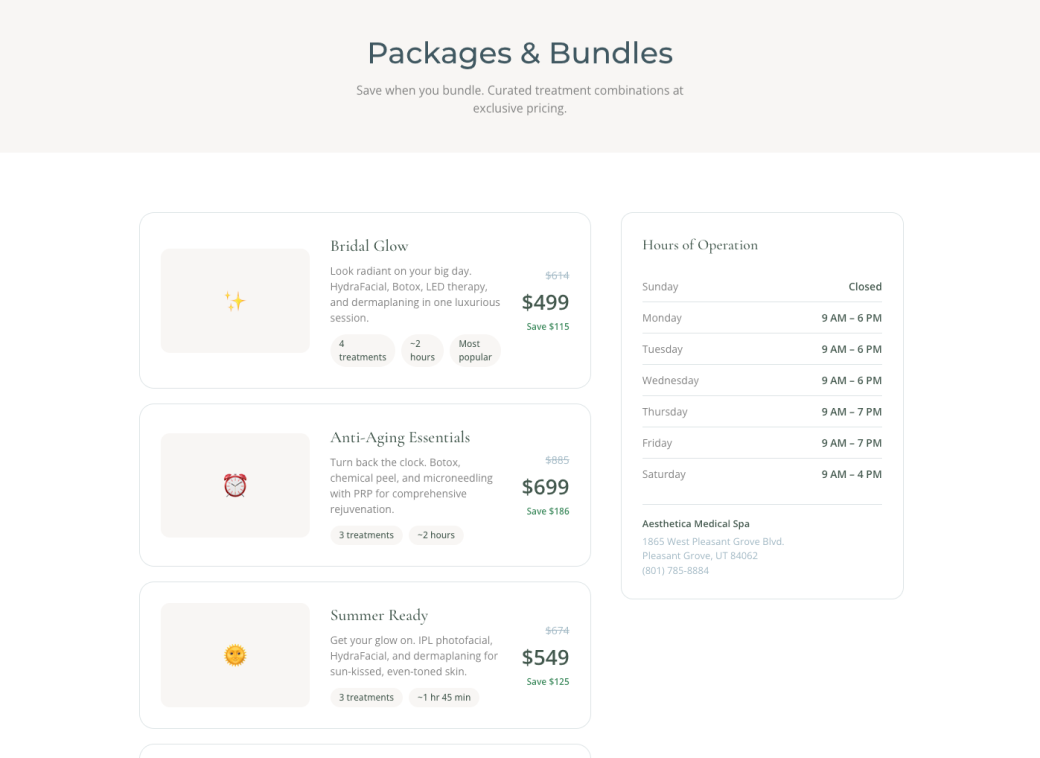
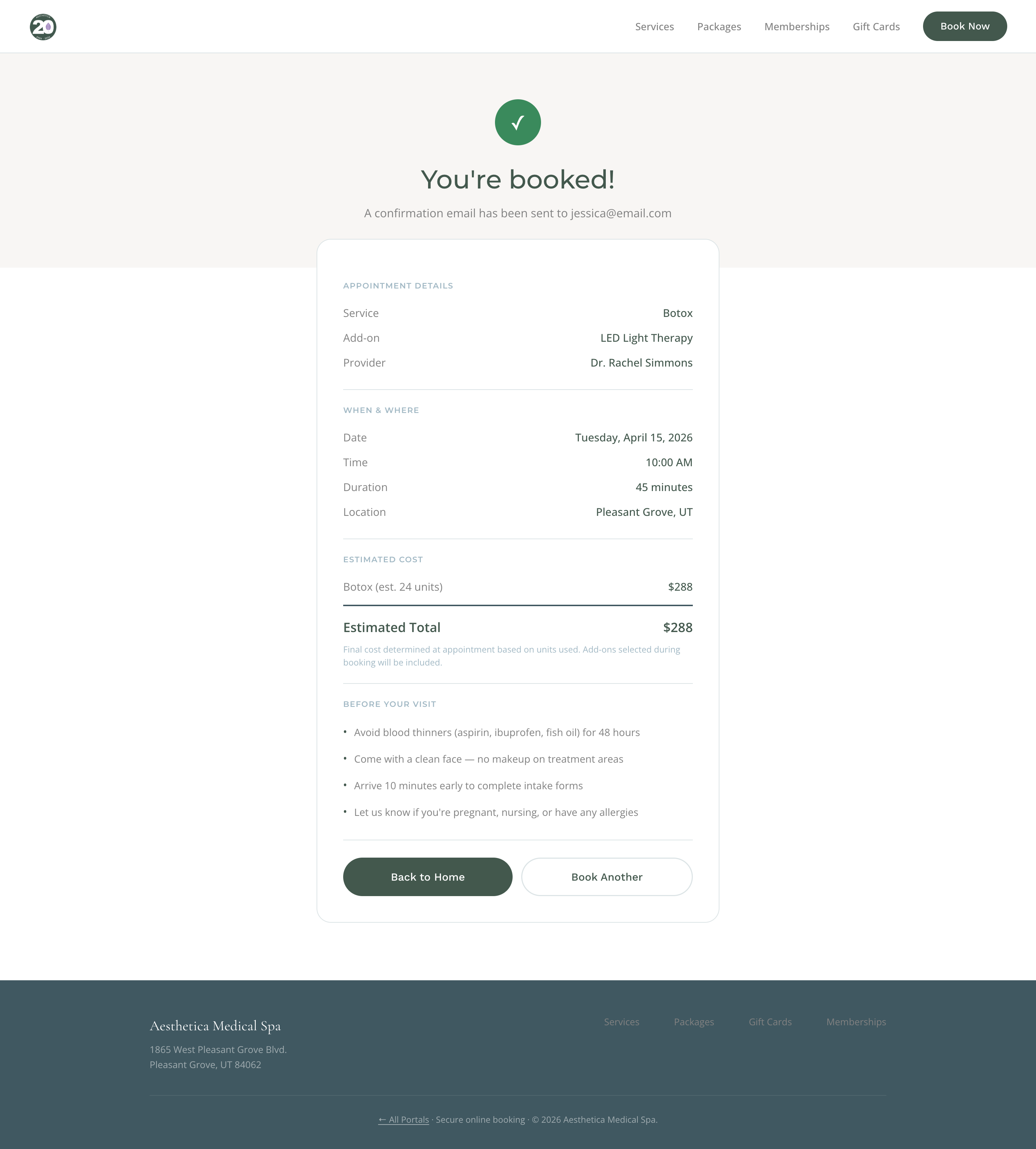
A multi-step flow can look simple while still creating cognitive load. Preserving context mattered more than minimizing the amount of information visible on every screen.
CRM connection
Making booking part of the existing customer relationship
Med spa businesses already managed clients, appointments, and communication in Podium. A separate booking record would leave the customer-facing and business-facing experiences disconnected.
The confirmed appointment was designed to save back into the business’s Podium CRM while service, provider, schedule, and location rules remained behind the scenes. Businesses could manage the visit beside existing customer information and continue communication through a familiar system.
Validation
Customer feedback turned the concept into an approved direction
Customer Success feedback established the initial signal. Conversations with beta customers then confirmed the importance of provider continuity and revealed that people lost context between booking steps.
I built the working prototype with Figma and Claude Code, used it to gather feedback, and added the persistent appointment summary in response. The direction and final designs were approved and handed to the development team.
My involvement ended during implementation. I did not have access to the completed release, post-launch analytics, or later customer feedback, so this case study does not claim measured outcomes.
Reflection
Fast prototyping made customer feedback more actionable
Simplifying the flow required resolving service eligibility, provider schedules, locations, and CRM records behind the scenes. Building the working prototype shortened the distance between an idea, a customer conversation, and the next iteration.
In future work, I would define the measurement plan alongside the requirements so customer feedback and post-launch behavior could be evaluated as one continuous product process.
More work at Podium
A broader product portfolio
My broader work included Payments, CRM, dispatch and job management, customer profiles, estimates and proposals, AI-assisted workflows, and mobile experiences.